
Not every Pokémon card came out of a booster pack. Between 1999 and 2003, Wizards of the Coast printed 53 numbered promo cards marked with a black star, and kids collected them at movie theaters, from magazines, in video game boxes, and at the weekly Pokémon League at their local game store. Each one is tied to a place and a date, which is a large part of the set's appeal. Here is what a Black Star Promo is, how kids got them, and where Pichu #35 fits.
What is a Black Star Promo?
On a Wizards-era promo, a black star with the word PROMO sits where a set symbol would normally go. The series runs from #1, a Pikachu handed out through the Pokémon League in July 1999, to #53, a Suicune packaged with the home video of Celebi: The Voice of the Forest in March 2003. Most of the cards had been released in Japan first.
How kids got them
At the movies. Theaters showing Pokémon: The First Movie in November 1999 handed out #2 through #5, Electabuzz, Mewtwo, Pikachu, and Dragonite, each with a gold "Kids WB Presents" stamp. Pokémon the Movie 2000 gave out Moltres, Articuno, and Zapdos, #21 through #23, in its second week. Entei #34 came with tickets to Pokémon 3 in April 2001, and Celebi #50 followed in October 2002.
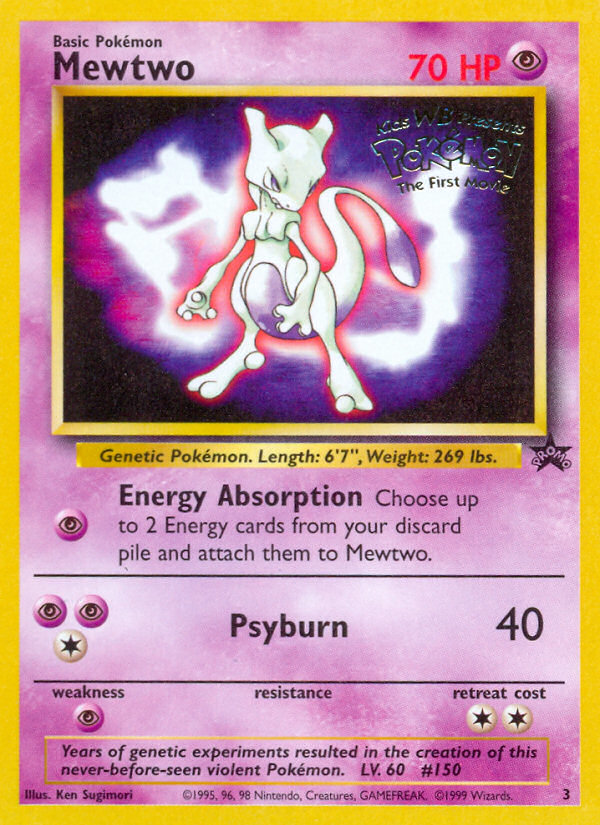
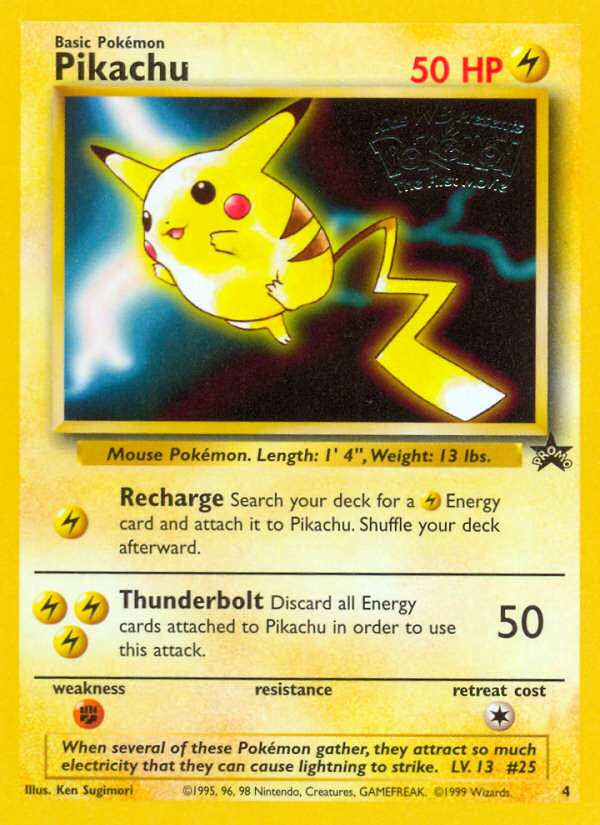
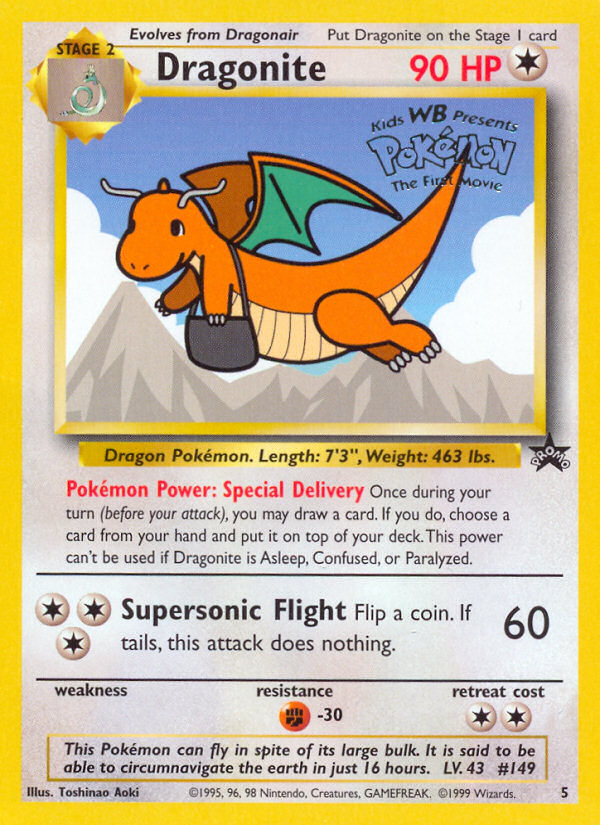
Mewtwo #3, Pikachu #4, and Dragonite #5, three of the four Black Star Promos given out with the first movie.
In magazines and game boxes. Nintendo Power included cards like Mewtwo #12 in April 2000, Dark Persian #17 in August 2000, and Sabrina's Abra #19 that October. Meowth #10 came with the Game Boy Color version of the card game, and Cool Porygon #15 came in a Pokémon Stadium bundle. Jigglypuff #7 was packaged with the movie soundtrack in November 1999.
At the Pokémon League. Most of the series went out through the League, the weekly casual play program at game stores, which handed out a new card nearly every month. Marill #29 in December 2000 and Snorlax #49 in August 2002 are two examples. The League is also where Pichu #35 came from.

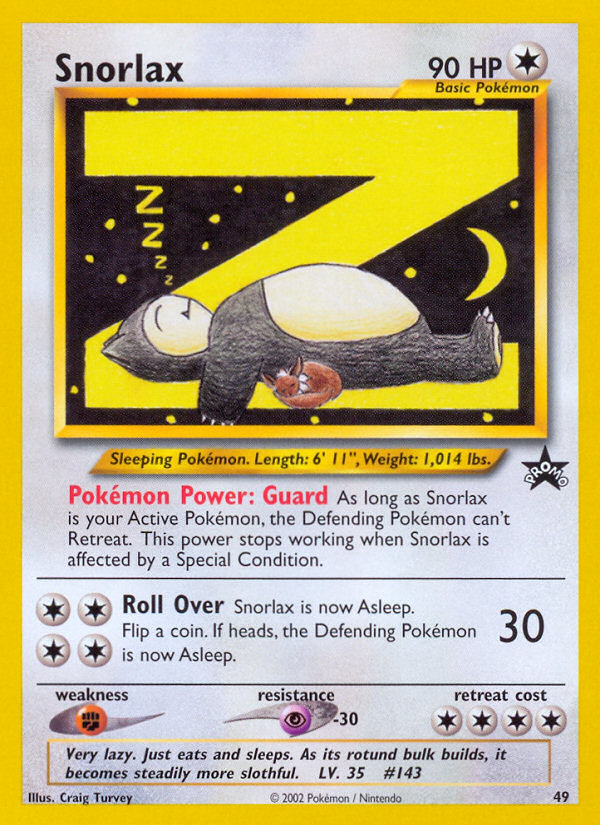
Marill #29 and Snorlax #49, two of the promos handed out through the Pokémon League.
At a store opening. When the Pokémon Center opened in New York's Rockefeller Center on November 16, 2001, visitors could get #40, a card called Pokémon Center, and #41, Lucky Stadium.
Is Ancient Mew a Black Star Promo?
Ancient Mew is probably the most searched Wizards-era promo, and it is not one of the 53. Wizards produced it for the first week of Pokémon the Movie 2000, and theaters gave it out sealed in a wrapper alongside a Pokémon League teaser card. It has no number and no black star, and its text is printed in an ancient-looking script instead of English. It belongs to the same story, though, and it came from the same theaters in the same summer.
Prerelease cards sit outside the numbered set in the same way. Wizards stamped only four cards with a Prerelease mark, for early League events: Clefable, Aerodactyl, Dark Gyarados, and Misty's Seadra. They are not numbered promos, but they come from the same years. You can read more about Clefable in our Jungle guide and Aerodactyl in our Fossil guide.
Pichu #35
Pichu #35 went out through the United States Pokémon League in April 2001. In Japan the same card was part of Premium File 2, a collectible set sold at theaters showing Spell of the Unown in the summer of 2000. The two releases were tied to the same film: Pichu made its anime debut in "Pikachu & Pichu," the short that opened Spell of the Unown in Japan, and the short reached American theaters with Pokémon 3 on April 6, 2001, the same month the card reached League play.
The card is a reverse holo, with the foil across the card body instead of the artwork, a finish that was still new in 2001. Entei #34, released the same month, is recognized as the first reverse holo card released outside Japan, and reverse holos didn't appear in a regular English expansion until Legendary Collection in May 2002. Our guide to holo and reverse holo cards explains the difference in more detail.
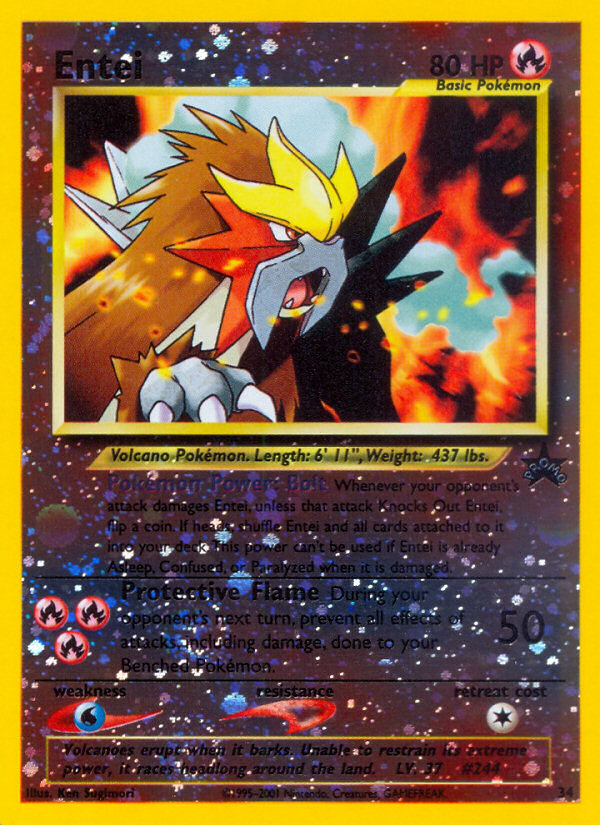
Entei #34, the first reverse holo card released outside Japan.
Ken Sugimori illustrated Pichu, a baby Pokémon introduced in Gold and Silver. The card lists it at level 4 with 30 HP, which was lower than the games allowed at the time, since Pokémon hatched from eggs started at level 5 until the fourth generation. On PSA's population report, 2,456 copies have been graded, with 559 PSA 9s and 69 PSA 10s at the time of writing.

PSA 9 · Wizards Black Star Promo, 2001
Ken Sugimori's Pichu, a Pokémon League promo from April 2001 and one of the earliest English reverse holos. PSA 9 Mint. Cert 46023642.
$825.00 View card
The world from 2000 to 2003
The Black Star years cover the second wave of Pokémon in America. Gold and Silver launched on October 15, 2000, and sold 1.4 million copies in their first week in the United States. Two months later, Neo Genesis brought the new Pokémon into the card game on December 16, along with baby Pokémon, Dark and Metal types, and Pokémon Tools. Pichu was in that set too, as a holo rare.
2001 brought Pokémon Stadium 2 in March, Pokémon 3 in April, Neo Discovery in June, Pokémon Crystal in July, and Neo Revelation, with its Shining Pokémon, in September. In the fall of 2002 came the e-Reader, a Game Boy Advance accessory that scanned strips on the cards, and the Expedition Base Set, the first set built for it. Expedition also cut packs to nine cards and had no 1st Edition print.
Skyridge, released in May 2003, was the last set Wizards produced. Nintendo of America distributed the next set, EX Ruby & Sapphire, that June, and Wizards' license ended on September 30, 2003. Wizards sued the next day, and the case settled that December. The last Black Star Promo, Suicune #53, had come out that March.
Collecting Black Star Promos today
CGC, which runs a registry for the set, points to what makes these cards appealing: each one has a story attached, from a League badge to a movie ticket, and many carry artwork by Ken Sugimori, Atsuko Nishida, and Kagemaru Himeno. PSA runs a Set Registry for the series as well. Collectors build the full 53, focus on the movie and theater cards, or chase copies of the theater promos that are still sealed in their original wrappers.
Keep reading
- Vintage Pokémon cards, era by era: a collector's guide
- The Neo era: Genesis, Discovery, Revelation, and Destiny
- Pokémon Fossil (1999): Aerodactyl and the fall of the first movie
- Holo vs reverse holo Pokémon cards
Browse the graded and ungraded Pokémon cards we carry in Artifacts.
Frequently asked questions
What is a Black Star Promo? A promotional Pokémon card marked with a black star and the word PROMO in place of a set symbol. The Wizards of the Coast series has 53 numbered cards released between 1999 and 2003.
How did kids get Black Star Promos? Through movie theaters, Nintendo Power, video game bundles, a movie soundtrack, the Pokémon Center New York opening, and most often the Pokémon League, which gave out new cards nearly every month.
Is Ancient Mew a Black Star Promo? No. Ancient Mew was produced by Wizards and handed out in the first week of Pokémon the Movie 2000, but it has no number and no black star, so it sits outside the 53-card series.
Is Pichu #35 holo or reverse holo? Reverse holo. The foil covers the card body rather than the artwork. It was released through the Pokémon League in April 2001, the same month as Entei #34, the first reverse holo released outside Japan.
What was the last Wizards Black Star Promo? Suicune #53, packaged with the home video release of Celebi: The Voice of the Forest in March 2003.
The sabi journal
Stories behind the things we carry